
Psychosocial Risk in Practice: Disability Services Edition
Psychosocial risks are one of the biggest challenges facing disability service providers today.
From high emotional demands and complex support environments to workforce pressures and changing expectations, disability sector teams face unique risks that require practical, informed responses.
-
68 learners
-
1 hours
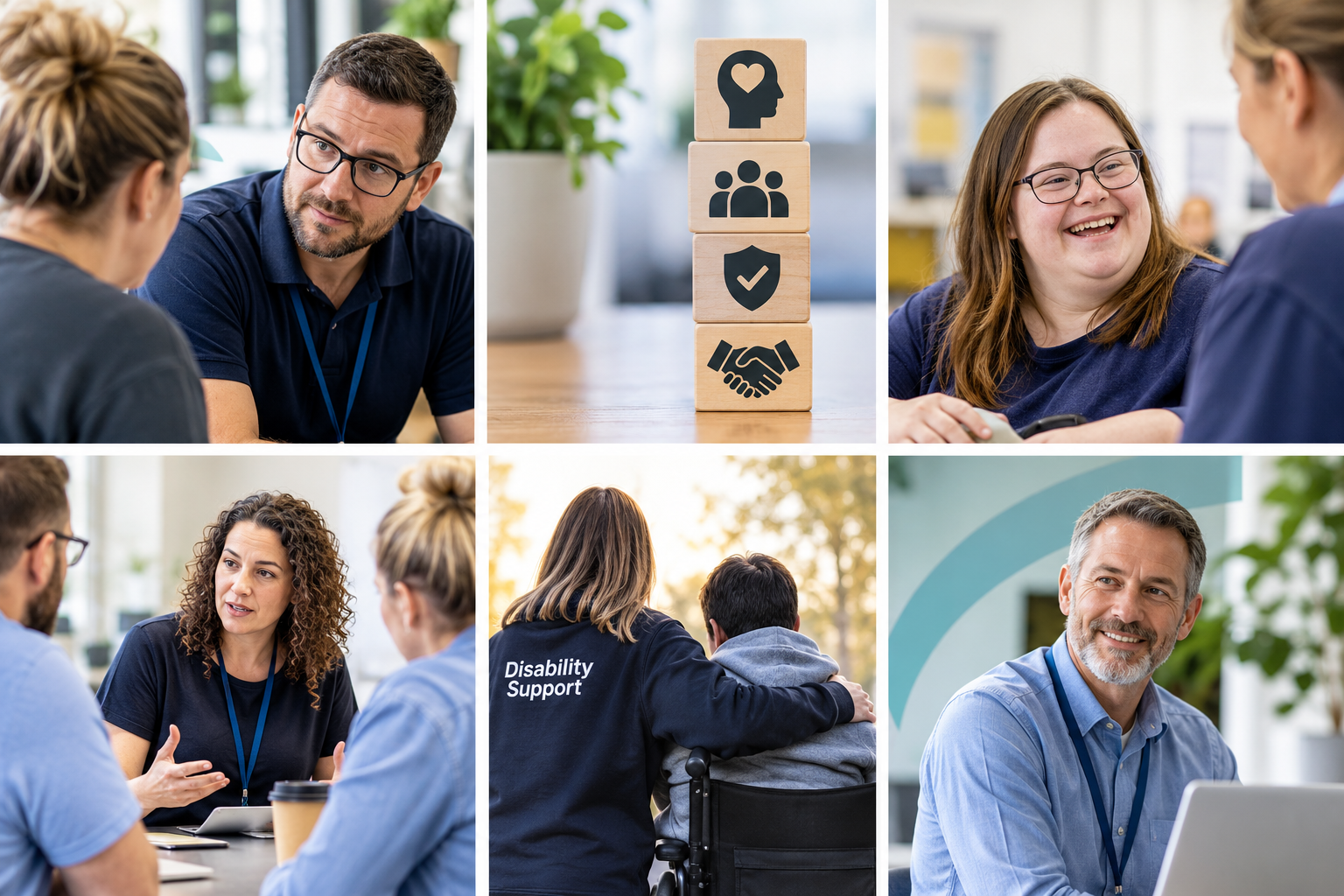
PRACTICAL PSYCHOSOCIAL RISK TRAINING FOR DISABILITY SERVICE MANAGERS
Recognising the risks is one thing. Knowing how to respond is another.
Disability support environments bring unique challenges, from complex behaviours and emotional demands to lone working, fatigue and unpredictable situations.
Does your management team know how to recognise when these pressures are affecting workers?
More importantly, do they know what to say and what steps to take?
This practical, clinician-led course gives managers the knowledge, language and confidence to identify psychosocial risks specific to disability services, have meaningful conversations with workers and respond appropriately before concerns escalate.
The real challenge is knowing:
How to recognise psychosocial risks specific to disability services
How to have practical and meaningful conversations with workers
How to respond early and appropriately when concerns arise
How to build safer, healthier and more supportive workplaces for teams and the people they support
Psychosocial Risk Management: Identify, assess and control risks in disability service environments
Managing psychosocial risks in disability services requires an understanding of the unique challenges workers face, from complex support needs and emotional demands to lone working, fatigue and unpredictable situations.
Taking a proactive approach to identifying hazards, assessing risks and implementing appropriate controls can help organisations create safer, healthier and more supportive workplaces.
In this online course, you'll explore practical, evidence-informed strategies to identify psychosocial hazards specific to disability services, assess and prioritise risks, implement effective controls and monitor outcomes to support continuous workplace improvement.
From Recognising Psychosocial Risks to Knowing How to Respond
The Challenge
"One of our support workers seems overwhelmed. How do I approach it?"
"Is this a performance concern, a workplace issue or a psychosocial risk?"
"How do I support a worker who is struggling with the demands of their role?"
"Is this a performance concern, a workplace issue or a psychosocial risk?"
"How do I support a worker who is struggling with the demands of their role?"
Before
I'm unsure how to recognise when workplace pressures are affecting a worker.
I'm not confident distinguishing psychosocial risks from other workplace concerns.
I avoid difficult conversations or wait until problems escalate.
I'm not confident distinguishing psychosocial risks from other workplace concerns.
I avoid difficult conversations or wait until problems escalate.
After
I can recognise early warning signs and emerging psychosocial risks.
I can confidently start meaningful conversations with workers.
I understand how to respond, take appropriate action and know when to escalate concerns.
I have a practical structure to guide conversations and support better workplace outcomes.
I can confidently start meaningful conversations with workers.
I understand how to respond, take appropriate action and know when to escalate concerns.
I have a practical structure to guide conversations and support better workplace outcomes.
What will I actually learn?
You'll develop practical capability to:
Recognise psychosocial hazards specific to disability services
Understand reasonable management action
Understand the limits of a manager's role
Identify early warning signs
Approach difficult conversations with confidence
Know when to escalate or seek further support
Learn from Experienced Workplace Rehabilitation Professionals
Learn from experienced professionals who bring together clinical expertise, WHS knowledge, management experience and extensive workplace experience across government, rehabilitation, disability, health and diverse work environments. With genuine cross-sector knowledge and hands-on experience navigating complex workplace challenges, you’ll learn from professionals who don’t just teach these concepts — they apply them in real workplaces every day.
Romina Allen
Romina Allen is a senior WHS professional with 15 years’ experience across some of Australia’s most demanding workplace environments, including disability services, financial services, high-risk trades and engineering. Having begun her career at SafeWork NSW, Romina brings strong regulatory knowledge and practical experience to her work, with a particular focus on psychosocial safety, workplace health and safety systems, and injury management.
Romina is passionate about practical education that helps leaders and managers understand their responsibilities, recognise psychosocial risks early and take meaningful action. Her training is clear, engaging and grounded in real-world experience — giving participants the knowledge and confidence to apply what they learn in their own workplace.
Romina is passionate about practical education that helps leaders and managers understand their responsibilities, recognise psychosocial risks early and take meaningful action. Her training is clear, engaging and grounded in real-world experience — giving participants the knowledge and confidence to apply what they learn in their own workplace.
Patrick Jones - Course author
Miranda Bruyn
SENIOR OCCUPATIONAL THERAPIST
Miranda is a Occupational Therapist and Clinical Lead with over 25 years’ experience in complex disability, injury management and rehabilitation consultancy, delivering evidence-based assessments, leadership and system-focused solutions across national schemes.
Miranda is a Occupational Therapist and Clinical Lead with over 25 years’ experience in complex disability, injury management and rehabilitation consultancy, delivering evidence-based assessments, leadership and system-focused solutions across national schemes.
Patrick Jones - Course author
Why learn with Rehabilitation Specialists Institute
Built on real rehabilitation experience
Our courses are developed and delivered by experienced rehabilitation and allied health clinicians who work directly with injured employees, employers, managers and workplace teams.
Clinical expertise, made practical
We take complex rehabilitation and allied health concepts and turn them into clear, practical tools, frameworks and strategies you can apply in your role.
Grounded in the workplace
Our education is informed by what actually happens in workplaces — the conversations, decisions, barriers and challenges that professionals face every day.
Practical and immediately applicable
You won't just learn the theory. You'll leave with practical approaches, questions, frameworks and strategies you can put into practice straight away.
Straight to what matters
No unnecessary theory. No information overload. Just clear, relevant education designed to help you do complex work with greater confidence.
Frequently asked questions
Is this just another psychosocial risk awareness course?
No. This course is designed to move beyond simply identifying psychosocial hazards. It focuses on the practical challenges faced by disability service providers and what managers need to do when risks emerge.
From recognising the impact of complex support environments, emotional demands and challenging behaviours to starting difficult conversations, responding appropriately and knowing when to seek further support, the focus is on practical skills that can be applied in everyday disability service environments.
From recognising the impact of complex support environments, emotional demands and challenging behaviours to starting difficult conversations, responding appropriately and knowing when to seek further support, the focus is on practical skills that can be applied in everyday disability service environments.
Our managers have already completed psychosocial risk training. Why do they need this?
Understanding psychosocial hazards is important, but knowing how to manage them in practice is where many organisations face challenges.
Disability service environments can involve unpredictable situations, complex support needs, lone working and significant emotional demands. Managers need to understand how these factors can affect workers and how to respond when concerns arise.
This course helps managers turn existing knowledge into practical capability by recognising emerging risks, having meaningful conversations and knowing what action to take next.
It's about moving beyond awareness and building confidence to respond.
Who is this course designed for?
This course is designed for people responsible for managing, supporting and protecting workers within disability service organisations, including:
- Disability service managers and operations managers
- Team leaders and frontline supervisors
- HR and People & Culture professionals
- WHS and safety professionals
- Service coordinators and program managers
- Executives and senior leaders with management or officer responsibilities
It is particularly relevant for those who oversee frontline disability support teams and may be the first to notice changes in worker behaviour, performance, engagement or wellbeing.

Copyright by The Rehabilitation Specialists. All rights reserved. © 2026
Created with