
Workplace Ergonomics:
Stop Guessing.
Start Assessing.
Learn how to assess real workstations, identify ergonomic risk and make practical changes that workers can actually use.
Designed for occupational therapists, physiotherapists, rehabilitation professionals, WHS professionals, managers and anyone responsible for supporting workers in office and hybrid environments.
• Practical • Clinically led • Evidence-informed
• Immediately applicable
BOOK THIS COURSE FOR YOUR TEAM.
-
Online self-paced
-
60–90 minutes
-
Certificate of completion
-
1 Assessment
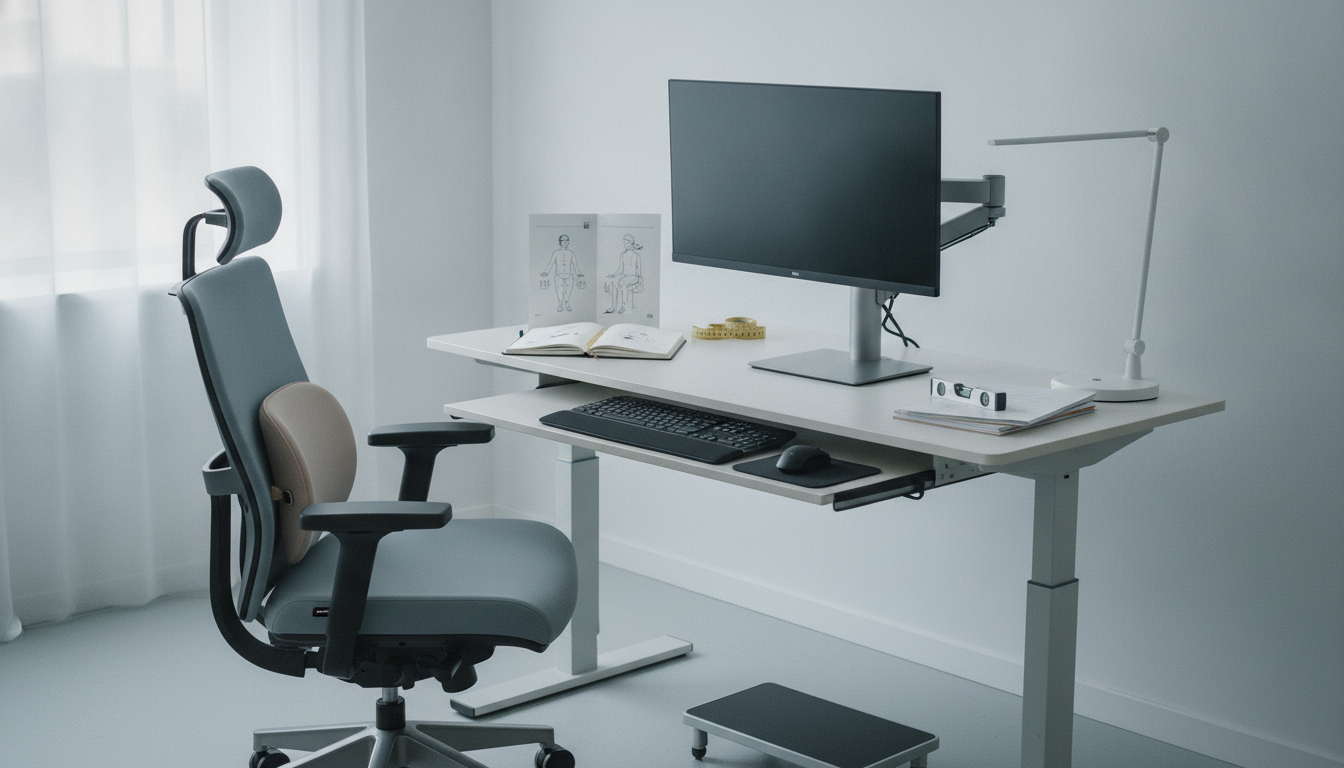
In around 90 minutes, you'll learn how to:
Assess a workstation systematically
Identify common ergonomic risk factors
Recognise when posture isn't actually the problem
Make practical workstation adjustments
Apply ergonomic principles to hybrid/home working
Communicate recommendations clearly
Write your awesome label here.
Is this course for you?
WHS Professionals
Develop a practical approach to identifying and managing workstation risks.
Managers & Team Leaders
Understand what good workstation setup actually looks like — and when to seek professional support.
HR & Injury Management Professionals
Better support workers experiencing discomfort or returning to work.
Rehabilitation Consultants
Improve the quality and consistency of workstation recommendations.
Workplace Ergonomics:
Assess workstations and prevent injury
A well-designed workstation can make a significant difference to worker comfort, health and performance. Effective ergonomic assessment helps identify potential risks associated with posture, workstation setup, repetitive tasks and physical demands, allowing practical solutions to be implemented before injuries occur. In our online course, you’ll learn how to assess workstations, identify ergonomic risk factors and apply practical, evidence-informed strategies to reduce injury risk and create healthier working environments.
Ergonomics taught by clinicians. Not furniture salespeople.
";
Anyone can tell you where to put your monitor. In this course, you learn to assess the worker, workstation, task, and environment together, then write clear, practical recommendations that hold up in real workplaces.
;
Clinical reasoning, not catalogues
";
No furniture catalogue. No one perfect posture. No generic checklist. You will practise making decisions based on capacity, symptoms, job demands, and context, so you can reduce MSD risk and support recovery.
;
Learn from Experienced Workplace Rehabilitation Professionals
Learn from experienced professionals who bring together clinical expertise, WHS knowledge, management experience and extensive workplace experience across government, rehabilitation, disability, health and diverse work environments. With genuine cross-sector knowledge and hands-on experience navigating complex workplace challenges, you’ll learn from professionals who don’t just teach these concepts — they apply them in real workplaces every day.
Brendon Hiscocks
Brendon is an experienced Exercise Physiologist and NSW State Manager with extensive experience across workplace rehabilitation, injury management and workstation assessments. With a strong clinical background and practical experience supporting clients with complex injuries, Brendon brings a clear, evidence-informed approach to workplace ergonomics.
Brendon is passionate about practical education that helps professionals identify workplace risks, understand the impact of poor workstation setup and apply simple, effective strategies to support employee health, comfort and productivity. His approachable and engaging training style combines clinical expertise with real-world experience, giving participants practical knowledge they can immediately apply in the workplace.
Patrick Jones - Course author
Why learn with Rehabilitation Specialists Institute
Built on real rehabilitation experience
Our courses are developed and delivered by experienced rehabilitation and allied health clinicians who work directly with injured employees, employers, managers and workplace teams.
Clinical expertise, made practical
We take complex rehabilitation and allied health concepts and turn them into clear, practical tools, frameworks and strategies you can apply in your role.
Grounded in the workplace
Our education is informed by what actually happens in workplaces — the conversations, decisions, barriers and challenges that professionals face every day.
Practical and immediately applicable
You won't just learn the theory. You'll leave with practical approaches, questions, frameworks and strategies you can put into practice straight away.
Straight to what matters
No unnecessary theory. No information overload. Just clear, relevant education designed to help you do complex work with greater confidence.
Frequently asked questions
Who is this course designed for?
This course is designed for anyone involved in supporting people in the workplace, including occupational therapists, physiotherapists, rehabilitation consultants, WHS professionals, injury management professionals, HR professionals, managers and team leaders.
It is particularly useful for professionals who assess or advise on office, home and hybrid workstations.
Do I need to be an occupational therapist or physiotherapist to complete the course?
No. The course is suitable for a range of workplace and health professionals. While the content is clinically informed, it focuses on practical workstation assessment and workplace application rather than requiring a specific professional qualification.
What will I learn from the course?
You'll learn how to assess a workstation systematically, identify common ergonomic issues, understand the relationship between the worker, task and environment, and make practical recommendations that can be implemented in real workplaces.
The course also covers workstation assessment in home and hybrid working environments, movement variation and when an issue may require further clinical assessment.
Is this course about finding the "perfect" posture?
No. The course takes a practical, evidence-informed approach that moves away from the idea that there is one perfect posture or workstation position.
Instead, you'll learn how to consider movement, variation, the individual worker, their tasks and their environment when making recommendations.
Is the course relevant to people working from home?
Yes. Home and hybrid working are a key part of the course.
You'll learn how to apply ergonomic principles to real-world environments, including situations where workers may be using a kitchen table, laptop or other non-traditional workstation.
Is the course practical or mainly theory?
The course is designed to be highly practical.
Rather than simply learning a list of ergonomic recommendations, you'll work through practical assessment principles and learn how to identify problems and determine appropriate solutions that can be applied in real workplace situations.

Copyright by The Rehabilitation Specialists. All rights reserved. © 2026
Created with